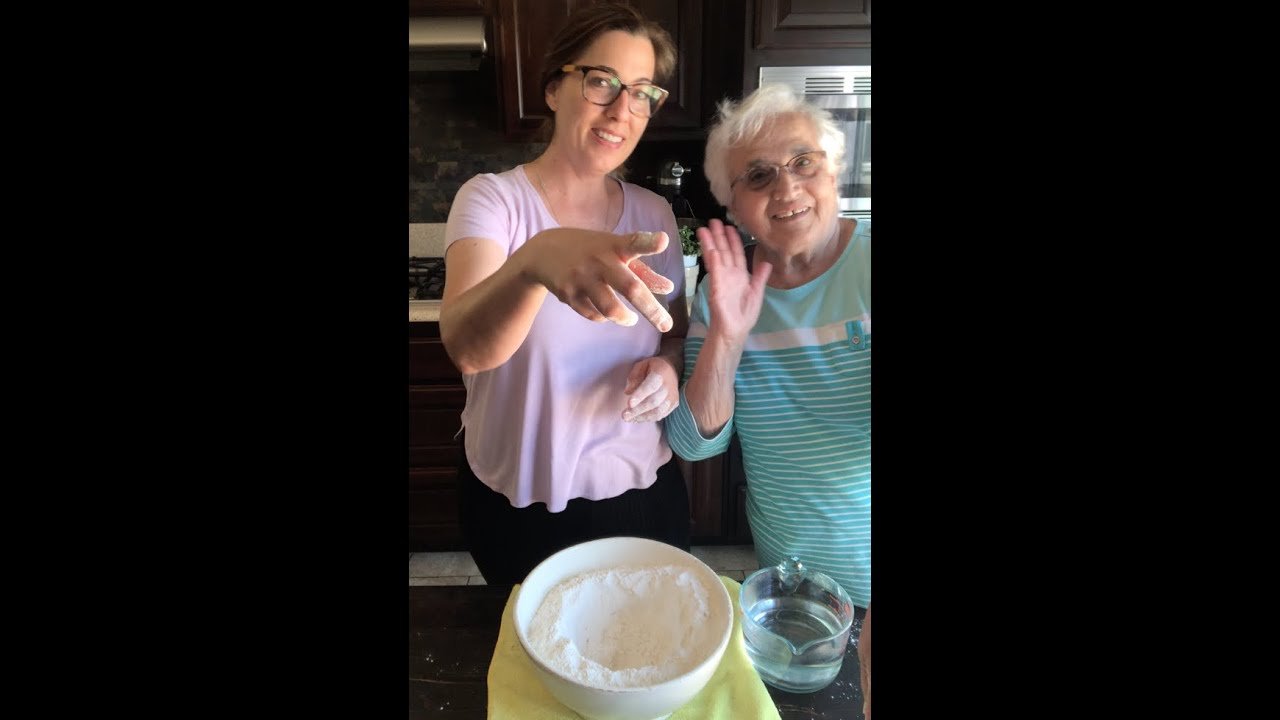
My mom takes me through the ancient process of making the traditional Italian recipe of master dough by-hand, for making bread, focaccia, pizza and other traditions like frittelle (fry bread), from her hometown of Tricarico, Italy.
This is part one, and the first-step in a series of posts where I share the individual techniques for making these beloved Italian staples.
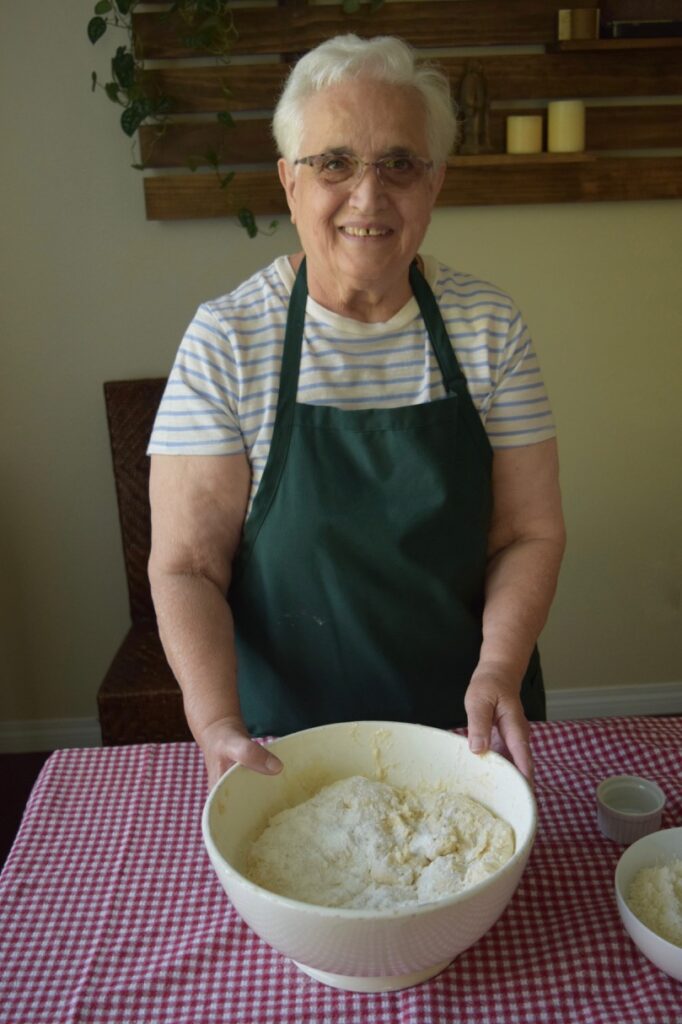
Most every area in Italy makes their dough and bread differently. These ways and traditions are passed down from area to area, and from generation to generation. My grandmother was from Bari, but moved to my grandfather’s family’s town and preferred their bread so she learned from the people.
My Nonna taught her own daughters, and finally my mom, who is a Nonna herself, teaches me for the first time, by allowing me to make this dough with my own hands. As a first-generation American, with teenage kids and a desire that has lasted a lifetime, this is a long overdue accomplishment for me. With such good results, it is hard to put into words what this means to me, and how happy I am about all of it.
Watching me put this together in a video is definitely a helpful supplement to the written recipe I’m sharing with you here. Here’s the link of me making this master dough for the first time.
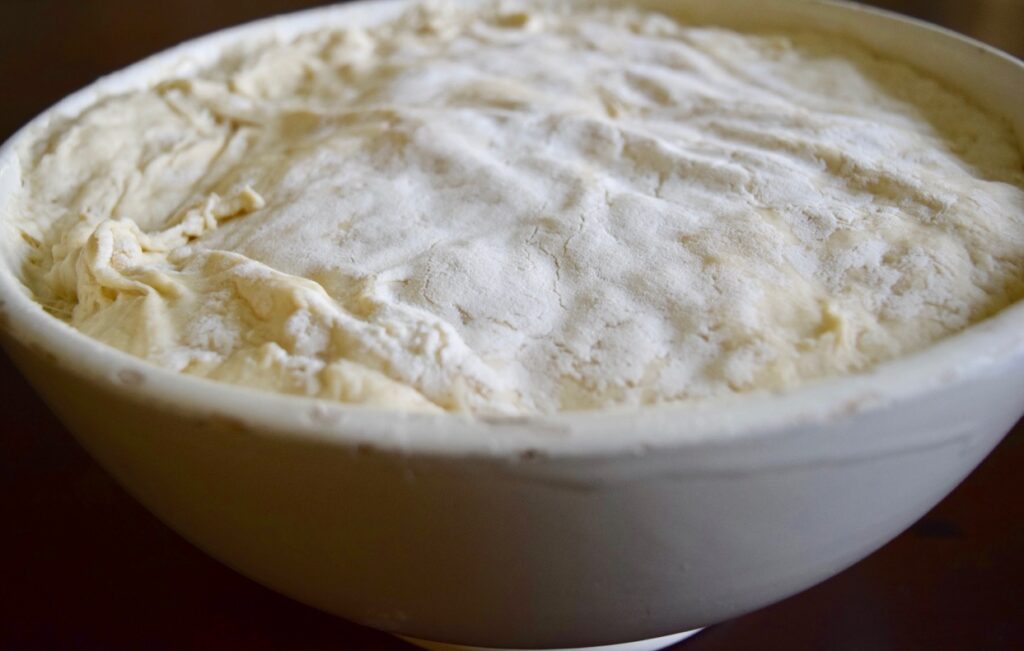
This is a first in a series of recipe-posts I’m working to share so that you can get the most from this dough. The step of mastering this “Master Dough,” is important so that you can go onto transforming it into the traditional foods that we have loved to eat for generations.
These staples in Italian culture like typical Pizza, Focaccia (a simple, bready-style of pizza), Calzone (closed-pizza), or Frittelle (Italian fry-bread ususally enjoyed on special occasions and holidays) are made using this dough.
You can definitely make bread with this recipe too, but it’s not as traditional and there are more steps to this process that I’ll also share later. In an upcoming post, I’ll share how to make rustic Italian bread, using the addition of potato, which allows for all of the beautiful air and height, with overall crispness of a harder crust that this region’s bread is known for.
Now, if you are not interested in the ancient method, and want a quick way to make bread dough, I have a solution for you: click to my no-knead bread dough recipe and method for making a rustic loaf, focaccia, etc.
If you’re ready for the tradition, let’s begin!
Master Dough (traditional recipe from Italy) for making Focaccia, Pizza, Calzone, and Frittelle
Ingredients
for activating yeast
- 1 and 1/4 cup water warmed to 115-120 degrees
- 2 and 1/4 teaspoon active dry yeast (one package)
- 1 teaspoon granulated sugar
dry mixture inside large bowl
- 8 cups all purpose flour
- 2 teaspoons coarse kosher salt
to set aside for kneading
- 1 cup all purpose flour
- 3 cups water – warmed to 115-120 degrees
Instructions
preparing the yeast
- First step is to prepare the yeast. Warm up between 1 cup, and 1 and 1/4 cup of water over the stove or microwave so that it comes to 115-120 degrees.

- Pour in yeast and sugar. It is not necessary to stir.
- Cover completely and set aside for 10 minutes before using to make the master-dough. The yeast will look activated and alive with a foamy, bubbly top.


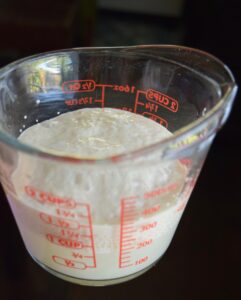
preparing to make dough
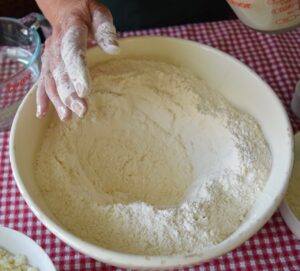
- In a large bowl combine: 8 cups all purpose flour, plus the two teaspoons of coarse, kosher salt.
- set aside the following: a) 3 cups of warm water (also at about 120 degrees) in it's own container or bowl that your hand can fit into, b) 1 cup of all purpose flour, and c) the activated water-yeast
kneading the dough and preparing it to rise
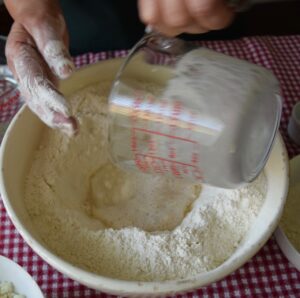
- Make a well in the center of the bowl.

- Pour in the entire contents of the water and risen yeast.

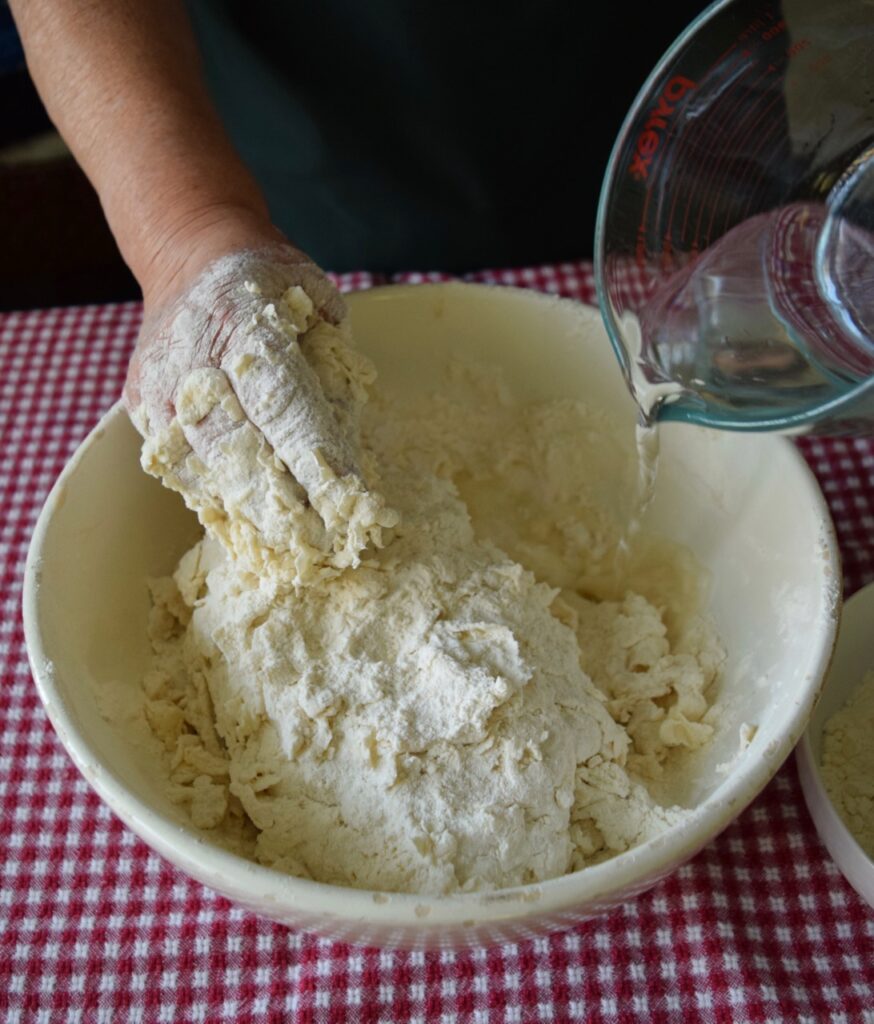
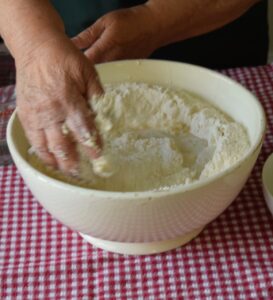
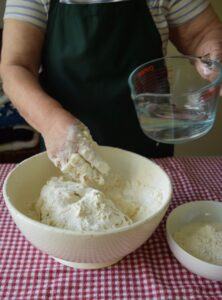
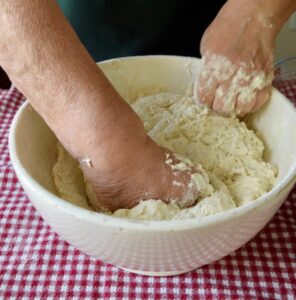
- With one hand, and in a circular motion, work the flour into the water.

- Combine all of the water from the well into the flour. Now there is no more well/pool of wetness.

- Once the well/pool has soaked-in, pour in between 1/2 and 3/4 cup of the reserved water to the top of the mixture. Try to get all of the flour centered and into the mound you are working with.

- By now, all of the flour is all in the mound but it is not wet enough. Add about a 1/2 cup more of the reserved water.

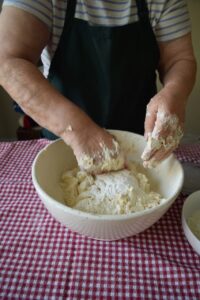
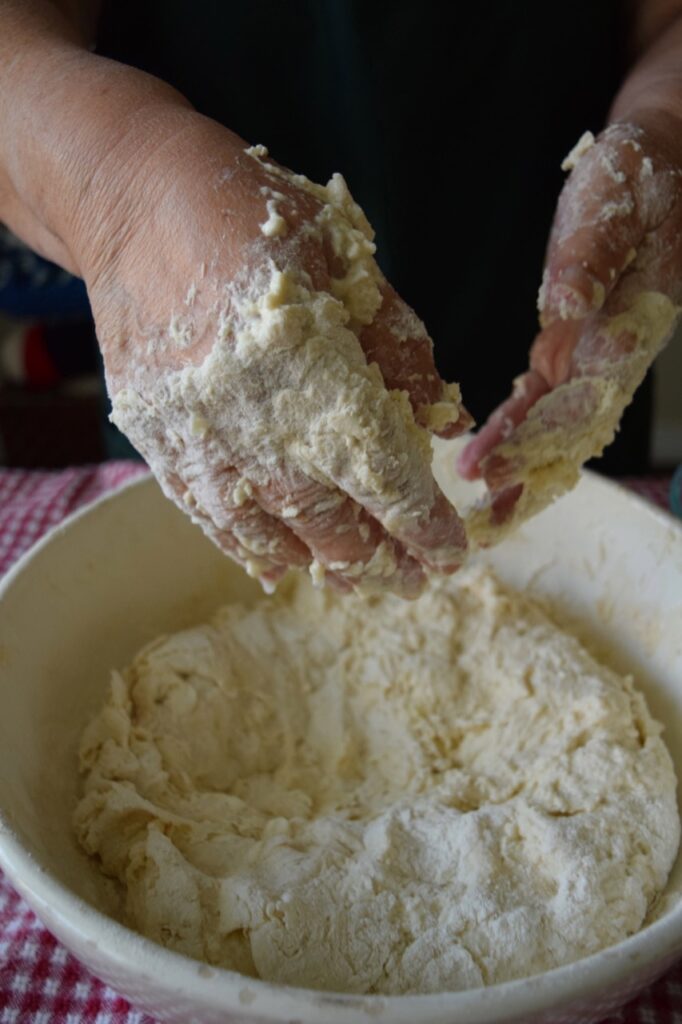
- Now is the time to use both hands to start punching and kneading this into dough. The goal from this point forward is to help the yeast to flourish. Keeping both hands in-motion will preserve the warmness of the water we want incorporated into the entire mound.

- Your hands by now, are completely covered with sticky dough mixture. It is time to put your hands into the warmed, reserved water. Dip one hand and get the water onto both and put those wet hands right back into kneading, to make a sloshy-sounding mound.
- You go back and forth from actively kneading, to going back to putting your hands into the water, to get the remnant ingredients off of your hands and into the dough. By the halfway point of the kneading process – at about 4 minutes in, you will have gone back and forth to dipping your hands into the water three times. The dough is now slightly too wet. Add a sprinkling of the reserved flour onto the top of the mound, about 1/4-1/2 cup.
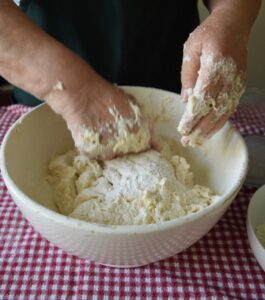
- Punch the added flour into the top and then flip the dough around so that the floured top is now at the bottom and the wetness from the bottom comes to the top of the bowl. Knead a little and now it's time to add water to your hands for the 4th time.
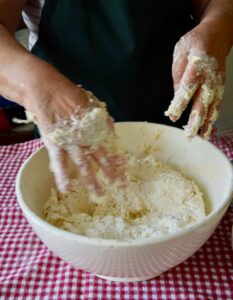
- You are working continuously with wet hands, to get the dough to feel less sticky and so that most everything from your hands gets incorporated into the final dough. Your are punching and flipping. (It's kind of fun but I imagine doing this every day for my family, as it was done generations ago, would be exhausting.)

- This is when your dough will change from sounding super "sloshy" and sticky, and will begin to sound and feel "smackey" as you punch. This is what you want and need and you knead. (See what I did there?) When your hands are sticking to the dough, you know it's time to wet your hands again, to keep this great newly formed feel and sound of the "smackeyness" going.

- You have gone in to dip your hands back into the reserved water for the 5th time, at about 5 minutes into this process. From this point, you'll dip your hands back into the water and go back and forth to knead around every 30 seconds or so, until your job is done. So there will be a 6th, 7th and 8th time of going back and forth until your dough is done being kneaded.

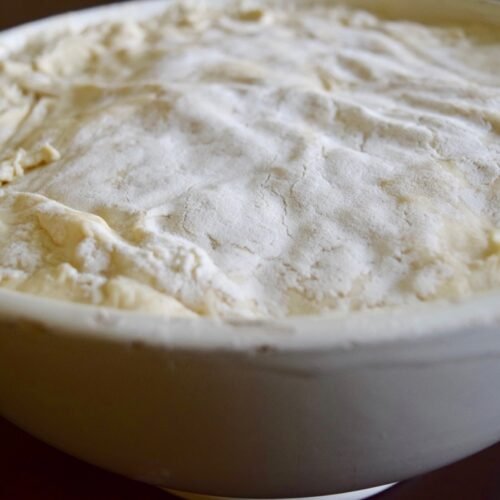
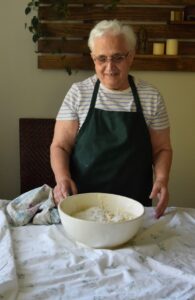
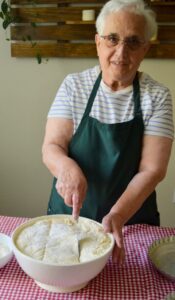
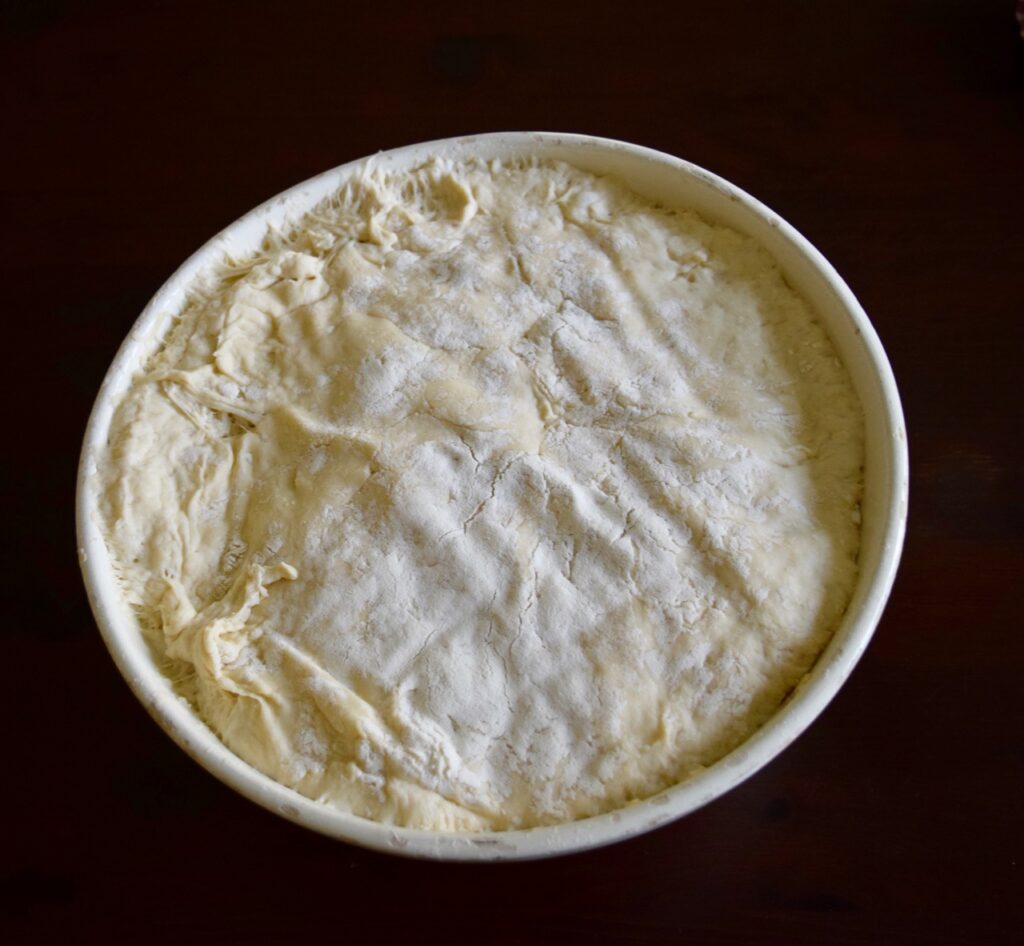
- At 7 minutes in, your dough has been completely kneaded. It is ready. It is releasing from your hands without stickiness. You will now lift the dough and liberally flour the bottom of the bowl. Place the dough on top of this floured surface. Liberally add flour all over the top of the dough.

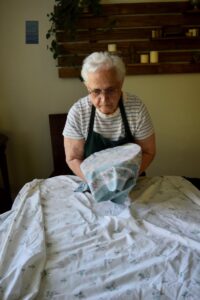
- (Traditionally, the dough is blessed by placing hands in the form of a cross to the top, to go along with a couple prayers that are said out loud.) Then the entire bowl is covered and wrapped tightly with layers of cloth.
- Keep it completely covered and set aside to rise for one hour. It should be done and ready to work with. If the dough has not doubled in size or you are not satisfied with the results after checking it, you can wait an additional 30 minutes to see if it rose any more. If it did not rise at all, your dough was not successful and I don't recommend cooking or baking with it.

- If your dough has risen, you are ready to bake or cook with it right away. Please see my summary notes at the top of this recipe for refrigerating or freezing instructions.





Video
Notes
This sharing of Italian recipes from my family is very special and important to me. It provides a history and legacy for this food, and all of the tastes that bring me back to my home and my childhood. I want to continue to enjoy these things, and pass them on to share for my own children, extended family, and anyone else who would want to enjoy these flavors and the special ways that this authentic Italian food is made.

This has been done since ancient times in Italy.
Families relied on the dough for making breads every single day.
Even with true confidence and the experience and having made this master dough hundreds of times, there may be times that it will not rise – for whatever reason that is beyond anyone’s control. When that happens, we start again and we try again.
Thank you for being here. I’m so happy to share this with you. If you have any questions or comments, please reach out to me.
Take care,